Communication and the Power of Your Response

You’ve probably discovered that there is a difference between “reacting” and “responding.” I’m raising two teenagers right now, and when they say or do something I don’t like, I am keenly aware of the difference between my “reaction” versus my “response.”

confused me

A reaction, for me, is a quick retort, a sarcastic remark, a childish eye-roll, or a critical statement. Responding, however, is different. Responding is thoughtful, appropriate, peace-making, and effective.

If you’ve been to a session with me, you’ll know that I often talk about the fight/flight/freeze mechanisms in the limbic system. If the limbic system in the brain, senses a stimulus as provocative, potentially dangerous or threatening, it will send out signals to fight, flight, or freeze. If a person is triggered by a stimuls, word, or action in anyway, that fight/flight/freeze reflex can be very intense.

The stress response activated by the limbic system is a great way to survive a real life attack, but not so good of a way to maintain healthy relationships.

Sometimes an over-active stress response can start arguments, shut down meaningful conversation or escalate fights- the very things that derail relationships. Would you like to Respond with Wisdom instead of Over-react from fear or anger? Me too. Let’s explore what happens when we react instead of respond.

48129872 - closeup sad young woman with worried stressed face expression and brain melting into lines question marks. obsessive compulsive, adhd, anxiety disorders

Reacting

When people react to a stimulus, they are often in a state of fear, anger or pain. Maybe the stimuls was hurtful or scary or mean, and the natutal reaction was one of survival only. Maybe your reaction was equally hurtuful or scary or mean. The thing about Survival Reactions is that they…

  1. come quickly and automatically
  2. not well thought out
  3. meant for survival, not relating
  4. can be interpreted by others as an attack (fight) or uncaring (flight, freeze)

If you experience fear, anger or pain, it’s likely that you will react (and sometimes over-react) with fight/flight/freeze behaviors. But what if your reactions are causing more problems? What if your reaction to stimulus (someone’s words or behaviors) is actually adding to the problem, instead of helping it?

Responding

Responses are different than reactions. When people respond to a situation, instead of react, they are more likely to have their emotions under control. People who respond wisely to a situation take the time to…

  1. consider all the options
  2. consider other points of view
  3. be thoughtful and deliberate

Sounds great, right? But how? One of my counseling professors used to  say, “It’s not what you do that matters. It’s what you do AFTER, that matters.” I think he is right. Although you are unable to go back in time for a redo, you are able to analyze what went wrong and how to avoid it in the future. For right now, maybe you’re only job is to notice how your Survival Reactions are making things worse instead of better.

48488978 - closeup excited woman with many ideas light bulbs above head looking up pointing finger up isolated on gray wall background. eureka creativity concept

Things to work on this week:

  1. Determine to observe and learn from the unhealthy dynamics in your communication.
  2. Apologize for your part by saying, “I’m sorry that I sometimes I say things without thinking. I am sorry I hurt you. I am working on that, and want to do better.”
  3. Harness the power of a well thought out response by taking your time, talking to a friend first, praying, writing it down.

Next week, I will provide some exercises that will help you discover ways to take back your control over your reactions, and help you respond with wisdom.




How to Have That Difficult Conversation

Are you avoiding a difficult conversation? Maybe you are afraid of an explosive reaction, or of being minimized or turned down. It is normal to have disagreements and hurt feelings in close relationships. Even the strongest relationships must address painful issues. Difficult subject matter like hurt feelings, broken promises, or dishonest dealings have the potential to ruin a relationship. But skillful communication can help a couple face the difficulty together.

friends-walking

Today, I want to give you a little gift of communication. I want you to have the SECRET WEAPON to trans-formative conflict resolution so that all your relationships, whether at home, work or school, benefit.

When you have to set a boundary, challenge a behavior, or get more information in the relationship, you may stress about how to do it with the least amount of discomfort to both parties. If you are in a strong and mutually respectful relationship, this tips and skills may be hard, but doable with practice.

  • The truth hurts. The honest truth, when presented with love and respect should hurt, but never harm. Like a flue shot that stings and leaves your arm sore for a day. The shot hurts, but is protecting you from something much more painful and giving you a gift of immunity.
  • Wait until you’re ready. Especially if you think the conversation could turn volatile. Take some time to think, journal, pray and research your topic. Pay attention to how you feel, and what you need.
  • Find a Good Place and Time. Think about the venue that would make you most comfortable and provide you the most support. Maybe you want to have it over coffee in a public café. Maybe you want to have it with a third party present, or in a private office away from others. Maybe you want to have it when the kids are at grandma’s house. The place and time doesn’t have to be perfect, it just has to be good enough.
  • Think about your own contribution. It’s good to take a look at your role in the situation and see how you contributed to the break down in communication or unhealthy dynamic. Be able to verbalize that in a way that honors both of you.

When you are ready to have your difficult conversation, the following formula is the gold standard.

When you say/do A___, I feel B___. I want you to do C instead.

For example, Jessica wants to tell Byron how hard it is for her to listen to him yell at the kids.

Example: Jessica can say, “Byron, I want to tell you that I’m sorry for not being as proactive as I could be with the kids. Sometimes I let them run too wild for too long, and then they get really crazy in the house. That’s my part, and I am working on being more proactive. I also have something I want to talk to you about. I feel frightened for the kids when you yell at them the way you do. I am scared that you are hurting their hearts with what you say. I am scared that your anger is doing real harm to them. I want you to talk to someone about your anger.”

couple in storm

In a strong relationship, Byron would respond, “Thanks for recognizing your responsibility and not laying into me. I am frustrated when I come home and the kids are acting like circus clowns. But I don’t have to yell at them the way I do. I actually feel really bad when I lose my temper with them. I see the way they look when I yell, and I don’t want to hurt them. Would you go to a parenting class with me, so we can get on the same page with the kids?”

This interaction may seem impossible in your situation. Maybe you can see your difficult conversation explode in your face. Maybe you feel like too many past hurtful words have put a wedge between you and your partner. However, if both parties are amenable to personal change and growth, thoughtful communication is a great first step toward healing.

swingset

What if it doesn’t work?

These tips are designed to help couples avoid the pitfalls of defensiveness, sarcasm, and shifting blame during their difficult conversations. So, if after trying these tips and skills you find yourself wounded because the conversation turned hostile, you may need additional help. Relationships with a power imbalance or untreated anger or anxiety take a lot more intervention than “good communication” can do by itself. In fact, even the most expert communication cannot heal the wound of relationship abuse, or emotional sickness. Toxicity in relationships must be addressed with skilled therapeutic intervention.

The Five Best Lessons from Dogs about Self-Love

Good Morning and Happy Valentines Day! My daughter is taking Spanish this year and reminded me that Wednesday’s Spanish name is miercoles. Come on! Is that the prettiest name for a day of the week, ever? It sounds like “miracle.” So Happy Miracle Day!

In honor of Valentine’s Day, this blog is for you and you alone. Valentine’s Day reminds us to show love to the people around us, but it is equally important to show love to ourselves. Who better to inspire self-love but good natured, lovable dogs?

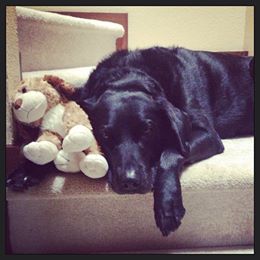
One night, my 105 pound black lab, Frisco attacked and destroyed a birthday present I was planning on giving a friend. He ate the contents (yes, there was chocolate and no, it didn’t kill him, much to Mr. Dashing’s disappointment) and then projectiled-it-out both ends. He shredded the paper, slobbered on the hard woods, (dried slobber is really tough to get up, it turns out) and marked the fireplace as his personal territory. He seriously went full-lab bonkers. He greeted us at the door with wild, caffeinated eyes and a happy tail. No remorse, no regret, no shame. All happy. I’m scrubbing stains out of the carpet and he’s wapping me with his happy tail.

It got me thinking, why can’t we be more like that? Why can’t we get over our mistakes as quickly as our dogs do? Granted, he did slink out the back door once I started yelling, but after a little while, he was back to his normal irritating self, without a care in the world. I don’t know about you, even after I make things right, I find myself rehearsing my mistakes, regretting my choice of words, and feeling guilty for my indulgences about an hour too long after they’ve happened. Who am I kidding? Ok, about two ½ days too long, actually.

So, I think I’m going to adopt Frisco’s style. I kind of admire the way he gets over himself. I kind of like how he forgives himself quickly and gets to his happy place again. What if we all could do that? And I have a sneaking suspicion, that if we forgave ourselves quickly, we’d be better able to do it for others too. Here are some things that Dog’s Just Don’t Do, and that if we followed suit, we just might wag our happy tail.

1.       Dogs don’t have self-doubt. You know the worry that sneaks up on you that you’re going to bollix everything up? That you could single handedly cause world mayhem? That you could do it so badly that you’d never live it down? Yeah, that’s called self-doubt, and I’m pretty sure dogs don’t have it. I’m pretty sure they don’t even think about the future or their place in it. Can you imagine Frisco saying to himself, “Oh, gee, I don’t think I’m a very good hole digger. There’s probably better hole diggers than me. I should just stop trying before people find out I’m such a failure of a hole digger.” No, he doesn’t judge his work, his hole digging performance or his behaviors at all. He just digs holes.

2.       They don’t feel guilty for napping and over eating. Dogs embrace the simple indulgences in life- napping in the sun, laying on the couch, sneaking food off the counter, chasing their tail, inhaling their food, throwing it up and eating it again. Yes! Dogs really know how to live in the lap of slothful luxury! What’s more, they do these things without a hint of Guilt. No remorse. No apologies. What would it be like to eat your meal, lick your lips and then roll around on the floor exposing your bare belly to everyone in the living room saying, “Look at this,people! Rub my belly!”

3.       They don’t get embarrassed. Mr. Dashing and I had a beagle named McKenzie before Sweet and Sassy were born. One time she raced off the porch at top speed and completely missed her landing. She rolled a few times, shook off her surprise and kept running. I’m pretty sure she didn’t say to herself, “How could I be so clumsy? I’m such an idiot! I shouldn’t even be allowed to run anymore! Look, everybody’s laughing at me!” No, dogs don’t have that thing inside them that says they should be embarrassed at mistakes. I’d say that dogs don’t feel shame, but I’ve seen a poodle with a hair cut, and a collie with a cone, and I’m confident that dogs feel shame. But they don’t feel shame or embarrassment over mistakes. That’s a human thing. Wouldn’t it be nice to not have to feel awkward or embarrassed over missteps, mispronunciations, misunderstandings, mis-communications and ordinary mistakes?

4.       They don’t hide their pleasure. When you do something that makes a dog feel good, they don’t keep their feelings on the inside. No! They groan, and moan, and roll their eyes back in delight. Their back leg involuntarily does that kicking thing, and they embrace ecstasy with full expression. Their whole body feels and expresses their joy. They chase and bark and run like crazy. A friend was baptized last week and when she came up out of the water, she jumped with hands in the air and water flying. That’s how I want to be about the things that bring me happiness. I want to embrace the fullness of joy and feel it to the maximum. I want to laugh loud, cry often, and feel to the depths. That’s where it’s at.

5.       They don’t do it alone. Dogs are pack animals and just can’t stand being without their family. If they are not with their pack, they don’t feel at peace. They don’t say silly things to themselves like, “Well, I shouldn’t need help from anybody. I should be able to do this on my own. I should be more self-sufficient! Maybe God just meant for me to be alone.” No! they love to be with their pack. They understand that doing life together with other people is not a weakness, but a strength. They understand that they need their pack, and their pack needs them. Your friends, family, sisterhood, and bros are the life blood in your veins and the reason you go on each day. Don’t deny them the gift of you.

There are more things that dogs don’t do, like clean up after themselves, stay off your bed, keep their hair to themselves, or respect your personal space but I can’t think of anything positive or inspirational to write about those things.

Much love to you all on your journey to relationship happiness and health. Give yourself a break today, give yourself the same love that God has for you.

Becoming a Pro at Self Care

Good morning to the Super Moons of my life! Did you know that the recent super moon appeared 14% bigger than usual? Well, that’s who you are to me- bigger and more special than just the standard stock moon. You are SUPER moons! 

Last week’s blog about over functioning got a ton of response. It’s like I hit a chord or something. Who’da thunk? So this week, I’m going to talk about Self Care. As if all the Over Functioners out there might need a little of that. Pshaw.

I’m not just talking about the tired, old self care stuff like “Get a massage,” or “Get a sitter,” or “Get some exercise.” No! This post will be WAY different.

And if it’s not, it’s still going to be exactly what you need to hear, because there is not a person I know ANYWHERE that doesn’t need a PUSH toward good self care. You care about a lot of things and a lot of people. You want the best out of life and the best out of yourself. So why not be the best at Self Care? Why not be the gal that people talk about asking, “How does she find the time….?” Why not be the guy that is posting fishing selfies all the time? Why not make everyone jealous of how good your take care of yourself?!

·         Lop it off. A principle of gardening says to cut off the dying leaves and flowers so they don’t drain the energy from the thriving plant. You may be tempted to keep a relationship or activity going even though it’s sucking you dry. You have to weigh how much energy this thing is sucking out of you compared to how much life it’s giving back. Don’t be afraid to lop it off (or aspects of it) so it will make room for healing, recovery and nurturing.

·         Prioritize it.  Once you’ve gotten rid of the thing that needed pruning, you will have more time and space for your thriving, wonderful self. Buckle down and get serious about your self care. Make sure that you prioritize yourself, cuz ain’t nobody gonna do it for ya.

·         Schedule it.This sounds like a no-brainer. You and I both know that if it’s not on the calendar, it’s not going to happen. The calendar is King, and self care doesn’t exist unless it makes it on the calendar. Schedule it daily or weekly and write it down. Once it makes it on the calendar, treat it like a sacred appointment that you don’t monkey around with. 

·         Sometimes it hurts. No one likes dentist appointments or physicals, or blood draws. But when was the last time you got your skin mapped, your weird mole looked at, your breasts squished, or your colon scoped? These routine appointments aren’t the funnest self-care activities, but they are important. Prioritize your health, and do the hard thing by getting yourself checked out. Sometimes we find ourselves avoiding medical attention because we are afraid of what the doctor might find. Don’t let this fear get the best of you. Information is your friend.

·         Pay for it. We value what we pay for. There is a lot of power in paying good money for self-nurture. When we pay for Self Care, we are telling ourselves, “you are worth it. Your emotional, spiritual, physical health is worth it. Your happiness is worth it.” If Self Care doesn’t cost you anything, then ask yourself why not?  You’re spending your money on something. So what are you prioritizing above Self care? And why? 

·         Make it a habit. Putting it on the calendar and paying for it is just the beginning. Lots of people get a massage now and then, or go away with friends every couple years, or get their nails done, or belong to a gym. These things are for amateurs. Making self care a habit is for the pros! Daily and Weekly Self Care is where it’s really at. When Self Care becomes a habit, you reap the emotional, spiritual and physical benefits like happiness, peace and health.

Let’s face it, we’ve all got some baggage in our past. Whether its baggage that someone else packed for us, or its baggage we’ve packed ourselves, there’s plenty of it there. Taking time, energy and money to nurture ourselves takes care of some of that baggage. I get it, that some baggage has to be unloaded piece by piece, memory by memory, hurt by hurt. That’s what counseling is for. But other baggage just needs some nurture, patience, time, and quiet. Every time you offer yourself some nurturing in the present, you’re soothing some kind of pain from the past. That’s just the way it works.

Some Self Care You May Not Have Thought of Yet…

·         Art Journal– doodle, write, color, paint and don’t display it. Keep it for yourself.

·         Meditate with Music– let your mind focus on one good thing at a time.

·         Silent Retreat– I dare you. Click here for the one I went to.

·         Read and Write Poetry- if you write some, send it to me. I love the stuff.

·         Enjoy Nature– this is God’s ongoing letter to me.

·         Feed the birds– seriously. Just feeds some birds. It makes you feel good.

·         Create something cool– maybe something with barn wood. It’s #trending.

·         Clean out a corner or a closet, and make it your own space- you know you want to!

·         Grow something- taking something from seed to fruit slows you down enough to be present.

I wonder how God will bless the little sacrifices of time you make for good self care. Each hour you spend getting in touch with yourself, with God and the spirit He’s put in you will bless you back double. Let me know what you are already doing to take care of the Valuable You. What will you change? What will you prune? 


Empathy Trumps Winning: How You Can Strengthen Your Relationships with Empathy

Our culture, for better or for worse, is highly competitive. There is a proverbial ladder in every area of life that can be climbed. Social ladders, corporate ladders, popularity ratings, sales quotas, quarterly results, tournaments, play offs, championships- all to determine who will be the best. Our culture thrives on competition. This isn’t true of every culture. Not every culture has the insatiable desire to be the best, the richest, the strongest, the prettiest, the most influential. But ours seems to.

And being competitive isn’t necessarily a bad thing, but it is a force in our society that colors the way we think. Being competitive can be a helpful driver in sports, and work, and deadlines. It can motivate us and push us to new heights. Competition has its place.

Just not in our relationships.

Competition can be highly destructive in relationships.  If competition becomes a way of life, then there always has to be a winner and a loser, the best and the worst, the top and the bottom. Relationships cannot thrive in those kind of competitive conditions.

Are you a Type A person? Are you driven, naturally competitive, and always looking for ways to improve? Do you have a critical eye? When you get into conflicts, are you tempted to win, or to play dirty? Is it hard for you to apologize when you’re wrong? Yeah, me too.

Here are a few tips to help you relate better in your relationships.

  • Learn Empathy: Your best defense against destructive competition in relationships is empathy. Take time to set aside your own ego and walk a mile in your partner’s shoes. Feel what it’s like to be him/her. Try on your spouse’s life for a while and empathize with the amount of stress he/she is under.
  • Practice Empathy: Make Empathy a regular practice. At your first critical thought, do an internal check and ask yourself, “Am I missing something?” You may easily see what is occurring on the outside, but take a minute to consider what is occurring on the inside. Ask yourself, “What are they experiencing right now?”
  • Communicate Empathy: Once you take the time to see how the other person is feeling, and what he/she may be experiencing on the inside, communicate empathy out loud. Repeat the words, “I see what you mean. I get how you feel.”  AND DON’T say the dreaded word, “But…” That nullifies your empathy. There should never be a “but” to empathy.
  • Learn How to Be a Good Loser: You don’t have to be right about everything. You don’t have to have it all together. You can suck at stuff and still be loved. Seriously. I’ve tried it, it’s true. You can be a loser and a lamo at some things.  I know, I know, it’s embarrassing to have flaws for the world to see. I understand how shameful it can feel when you fail or get rejected or feel like a LOSER at life. So just take it in stride. Learn how to be The Best Loser, Lamo, Wanna-Be there is!

When you practice empathy in your relationships at home and a work, you will feel happier. You will feel less pressure to be perfect, and to expect perfection from others. You will feel closer to the people around you. You will feel less temptation to compare yourself with others and more satisfaction just being who you are. You will also find that giving some empathy to yourself is not such a bad idea, either.